Korea ISA Tax Benefits for US and Canadian Investors: 2026 Eligibility, Deadlines, and Cross-Border Rules
Why Korea's ISA Matters for North American Savers Right Now
Global finance markets entered June 2026 under extraordinary pressure. Prolonged geopolitical conflict has raised the stakes for capital preservation, while sweeping tariff regimes continue to reshape cross-border investment flows country by country. Against that backdrop, South Korea's Individual Savings Account — the Korea ISA — has become one of the most searched tax-advantaged vehicles among American and Canadian residents, expatriates, and dual-status filers who want shelter from volatile equity swings without abandoning disciplined long-term saving.
If you are comparing tax wrappers, savings guides, or refund-eligible investment structures across jurisdictions, the Korea ISA deserves a place on your shortlist today. British investors have long debated ISA pitfalls — from hidden fee drag to provider switching costs — and the same comparative discipline applies here. North American readers who fail to map Korean tax treatment against IRS and CRA obligations risk overpaying on one side of the border while missing legitimate benefits on the other. Start your side-by-side review now before year-end contribution windows narrow.

What the Korea ISA Offers and Why Cross-Border Rules Complicate the Math
South Korea's ISA is a government-backed wrapper that consolidates deposits, funds, bonds, and listed equities inside a single account. Qualifying gains and dividends can receive preferential tax treatment after a mandatory holding period, effectively lowering your effective rate on compounded returns compared with a standard taxable brokerage account. For domestic Korean investors, that structure functions as a powerful wealth-building tool. For US and Canadian participants, however, the account sits at the intersection of three tax systems — Korean statute, bilateral treaty provisions, and home-country worldwide income reporting.
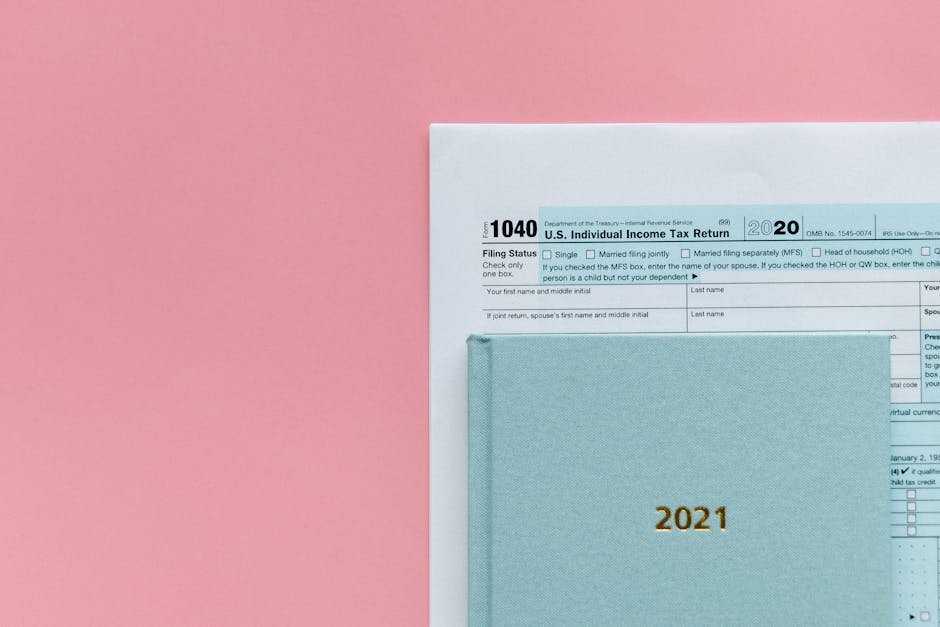
Americans remain subject to US citizenship-based taxation regardless of residency. The Internal Revenue Service generally does not recognize foreign tax-advantaged wrappers the way Seoul does, meaning ISA income may still be reportable on Form 1040, with potential FBAR and FATCA disclosures if aggregate foreign financial account balances exceed statutory thresholds. Canadians, taxed on residency rather than citizenship, face a different matrix: CRA may treat ISA growth as foreign investment income, while the Canada-Korea tax treaty can offset double taxation if foreign tax credits are claimed correctly on Schedule 3 and Form T2209.
With UK firms warning of an urgent corporate exodus amid shifting fiscal policy, and major economies recalibrating budgets under tariff uncertainty, mobile professionals are increasingly unwilling to leave ISA balances structurally misunderstood. Getting the classification right in 2026 is not optional — it is a core global finance hygiene task.
Eligibility, Contribution Limits, and Booking Conditions
Before you reserve an account or initiate a transfer, confirm that you satisfy Korea Financial Services Commission eligibility gates. The standard retail ISA is available to adults aged 19 or older with Korean tax residency status. Foreign nationals legally residing in Korea — including US military contractors, English teachers, and corporate assignees on D-series visas — may open an ISA through participating banks and securities firms, provided they hold a valid Alien Registration Card and a Korean tax identification number.
Key booking conditions you must verify with your provider before funding:
- Annual contribution ceiling: Retail ISAs typically cap fresh contributions at 20 million Korean won per calendar year, with a lifetime ceiling of 100 million won across the account's life. Exceeding either limit can disqualify preferential tax treatment on the excess portion.
- Mandatory commitment period: Tax benefits generally require a three-year minimum holding commitment from the account opening date. Early restructuring may trigger clawback of prior exemptions.
- Single-account rule: Each individual may maintain only one Korea ISA at a time. Opening a duplicate account at a second institution violates booking conditions and can void benefits retroactively.
- Product mix restrictions: Certain high-risk derivatives, unlisted vehicles, and offshore funds are excluded. Confirm that US-listed ETFs available through Korean brokerages qualify under your chosen ISA plan.
- US and Canada nexus disclosure: Providers increasingly require written confirmation of foreign tax status at onboarding. Failure to disclose American or Canadian citizenship can create compliance gaps on both sides of the border.
Run an eligibility calculator with your bank's online tool — input expected annual contribution, planned withdrawal year, and current marginal tax bracket in Korea. Then mirror those outputs against a US or Canadian effective-rate estimator. The spread between those two numbers is your true after-tax advantage, not the headline Korean exemption rate alone.

Step-by-Step Reservation, Funding, and Payment Process
Act today if you intend to capture the full 2026 contribution year. Delayed onboarding pushes your three-year commitment clock later and can cost you an entire annual funding slot. Follow this sequence used by major Korean banks and securities houses:
- Step 1 — Compare providers: Evaluate fee schedules, English-language support, mobile app quality, and ISA-qualified product menus across at least three institutions. Fee drag mirrors the ISA pitfalls documented in mature markets — small management spreads compound into material leakage over a decade.
- Step 2 — Reserve your account slot: Complete online pre-registration or visit a branch with ARC, passport, and proof of Korean address. Some institutions allow same-day reservation holds that expire within 72 hours if KYC documents are incomplete.
- Step 3 — Submit KYC and tax forms: Upload identity verification, sign the ISA commitment agreement, and file your foreign-taxpayer declaration if applicable. Branch staff can notarize cross-border forms on the spot.
- Step 4 — Link payment rails: Connect a Korean won deposit account for ACH-style transfers. Wire funding from US or Canadian correspondent banks is permitted but may take three to five business days and incur SWIFT fees that erode first-year yield.
- Step 5 — Execute initial contribution: Transfer your opening deposit before the provider's daily cut-off — typically 3:00 p.m. KST on business days. Contributions stamped after cut-off count toward the next business date, which matters near December 31 deadlines.
- Step 6 — Allocate across qualifying assets: Distribute funds among approved deposits, bond funds, and equities according to your risk profile. Rebalancing inside the ISA does not trigger Korean capital gains events.
- Step 7 — Archive confirmation records: Download PDF account certificates, contribution receipts, and the signed three-year commitment letter. US and Canadian tax preparers will require these during amending or treaty-credit filings.
Rate limits on daily transfers vary by institution — most retail banks cap outbound and inbound ISA funding at 10 million won per day without a branch override. Request a temporary limit increase in advance if you plan a lump-sum year-end top-up.

Payout Timelines, Withdrawals, and Tax-Exempt Distribution Rules
Understanding when money actually reaches you is as important as the advertised exemption. Inside the commitment window, partial withdrawals are permitted but reduce your cumulative tax-exempt gain allowance on a pro-rata basis. Providers publish payout timelines as follows: standard withdrawals to a linked Korean deposit account settle T+1 business day; cross-border wire redemptions to US or Canadian accounts require T+3 to T+7 business days depending on intermediary correspondent banks.
After the three-year commitment expires, qualifying accounts graduate to a higher lifetime tax-exempt gain threshold — historically up to 2 million won in exempt investment returns for general retail ISAs, with enhanced ceilings for younger savers under youth ISA programs. Amounts above that band face a preferential flat rate rather than ordinary marginal schedules. Confirm the current year's exempt ceiling with your provider, as National Assembly finance committee sessions in late 2025 signaled possible inflation-indexed adjustments for 2026.

Cancellation, Refund Policies, and Regulatory Timelines
ISA accounts are not demand-deposit products — cancellation follows structured rules. If you rescind during a statutory cooling-off window — typically seven calendar days after opening without having executed trades — providers must refund your principal in full to the source account within two business days with no penalty. After that window, cancellation is reclassified as early termination: the account converts to an ordinary taxable investment account retroactive to opening, and previously exempt gains are recalculated and assessed.
Refund timelines for erroneous contributions — such as deposits breaching the annual cap — depend on detection speed. Banks that catch the error within the same business day usually reverse the transfer within 24 hours. Errors identified after trade settlement may require up to 15 business days for regulatory reporting, recalculation, and principal return. Document every inquiry ticket number; Korean Financial Supervisory Service mediation is available if a refund exceeds 30 days without written explanation.

US and Canada Reporting: Warnings Every ISA Holder Must Respect
The largest mistake North American holders make is assuming Korean exemption equals home-country exemption. It does not. US persons should budget for annual Form 8938 and FinCEN 114 filings when thresholds are met, and discuss Form 8621 implications if ISA holdings include passive foreign investment company funds. Canadians must report foreign property exceeding CAD 100,000 on Form T1135, even when income is deferred inside the ISA.
Additional warnings from cross-border advisory practice:
- Treaty credit mismatches: Foreign tax credits are not automatic — you must file supporting schedules with calculated credit limits.
- Currency risk: Won-to-dollar or won-to-loonie swings can overwhelm modest tax savings if repatriation coincides with adverse FX moves, especially during tariff-driven volatility.
- Residency transitions: Departing Korea mid-commitment does not dissolve reporting duties in either jurisdiction for the years you held the account.
- Provider insolvency safeguards: ISA assets are segregated under Korean investor protection schemes, but US SIPC and Canadian CIPF coverage do not apply to Korean custodial accounts.

Insider Tips for Maximizing After-Tax Outcomes in 2026
Sophisticated global finance participants stack small advantages that compound. Fund early in the calendar year so gains accrue across the full 365-day window. Prioritize low-turnover index funds to minimize PFIC risk for American filers. Canadians approaching the foreign-property threshold should model ISA balance growth monthly rather than waiting for a surprise T1135 filing obligation. If you split time between countries, synchronize Korean tax residency certificates with CRA departure filings to avoid duplicated marginal taxation on the same ISA distribution.
Review tariff-sensitive sector exposure inside your ISA allocation. Guardian economic analysis in March 2026 highlighted how prolonged supply-chain conflict can shock energy and semiconductor valuations — sectors that dominate many Korean retail portfolios. Rebalance before crisis headlines move prices, not after.
Frequently Asked Questions
Can a US citizen living in California open a Korea ISA without Korean residency? No. Retail ISA booking requires Korean tax residency and domestic KYC verification. Non-resident Americans cannot access the standard wrapper remotely.
Does the Canada-Korea tax treaty exempt ISA gains from CRA reporting? No treaty article exempts ISA-specific growth from Canadian reporting. Treaty benefits operate through foreign tax credit mechanics, not automatic exclusion.
What happens if I exceed the 20 million won annual limit? Excess contributions lose preferential status for that year and must be withdrawn or reclassified. Providers issue a corrected tax certificate within 10 business days.
Can I transfer an existing taxable Korean brokerage account into an ISA? In-kind transfers are permitted for qualifying securities during the annual booking window, subject to product eligibility review and a documented transfer request form.
Is there a penalty for missing the December 31 contribution deadline? There is no penalty fee, but the unused annual slot cannot be carried backward. You permanently lose that year's 20 million won capacity.
Your Next Move in a Volatile Global Finance Landscape
Korea ISA tax benefits remain genuinely compelling for eligible residents who understand the full three-way tax picture. They are not a set-and-forget loophole for Americans or Canadians — they are a precision instrument that rewards disciplined comparison, timely booking, and rigorous documentation. With tariff regimes shifting, corporate migration reshaping OECD fiscal competition, and household budgets squeezed by macro uncertainty, the cost of postponing your eligibility review is measured in forfeited contribution years and irrecoverable exemption headroom.
Before tonight, line up your provider shortlist, pull your latest US or Canadian return for foreign-credit reference, and browse current cross-border savings, insurance, and investment platform comparisons built for internationally mobile households. The investors who act while windows are open — not after headlines force reactive decisions — are the ones who capture Korea's ISA advantage without triggering the compliance surprises that turn a tax benefit into an expensive audit story.



댓글
댓글 쓰기